
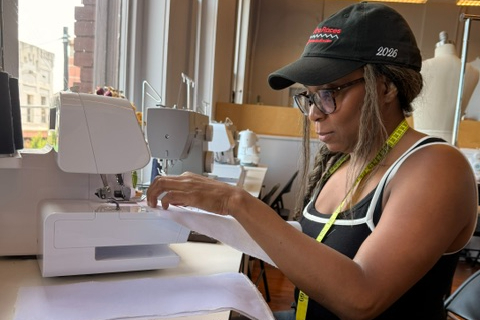
Blume & Hall Fashion Academy is part of a new chapter for fashion education in Arkansas. Founded by Ashton Hall and Lara Blume McGee, the Little Rock academy combines couture techniques with practical business training, giving aspiring designers the opportunity to develop both the creative and professional skills required to build lasting careers. Licensed by the Arkansas Department of Higher Education, the academy offers students an environment where craftsmanship, mentorship, and industry experience intersect.
The academy represents an evolution of the former Jamileh Kamran Arkansas Fashion School, carrying forward its commitment to fashion education while introducing a renewed vision shaped by Hall’s international experience as a designer, creative director, and fashion executive. In this conversation with Dreamweaverarts, Hall discusses why fashion education must evolve, the opportunities he believes Arkansas offers emerging designers, and how Blume & Hall Fashion Academy is preparing students for an industry that demands both artistry and entrepreneurship.
“When you’ve spent forty years in this industry, from the ateliers of Paris to the boardrooms of Michael Kors, you see fashion from every angle. And what you see, especially in fashion education, is a system that prepares students for a fantasy rather than a livelihood. That’s why I am here in Little Rock, Arkansas, to make a change in the process.”
Ashton Hall
President, Blume & Hall Fashion Academy

1. What problems did you see in fashion education that made you feel an academy like this needed to exist now, especially in Arkansas?
As a graduate of the Fashion Institute of Technology in New York City, the traditional fashion education model is broken. It teaches students to dream of Fashion Week runways but not how to run a business. It funnels young talent through top fashion design schools where they compete for unpaid internships while drowning in debt.
Arkansas isn’t a compromise—it’s an opportunity. Here, we have lower overhead, a supportive community, and the space to build something sustainable. I had this same setup in New Jersey, where I ran my school alongside an alterations department along with my own clothing line, the Ashton Hall Collection. That triad—education, service, and production—created a self-sustaining ecosystem. I duplicated that concept here in Little Rock, especially when I saw the foundation that Jamileh Kamran had already built. We’re not starting from scratch; we’re building on a legacy.
2. What do you hope your graduates understand about the industry that you wish more emerging designers knew?
That fashion is a craft and a business in equal measure. You can have the most brilliant designs in the world, but if you don’t understand your costs, your margins, your production timelines, and your customer, you won’t last two seasons. I had the opportunity to work as a Production/ Product Development Manager during half my career. I was able to understand the importance of pattern making, draping, sourcing and the relationships with factories and fabric mills. We connect our students directly to this process with the curriculum.
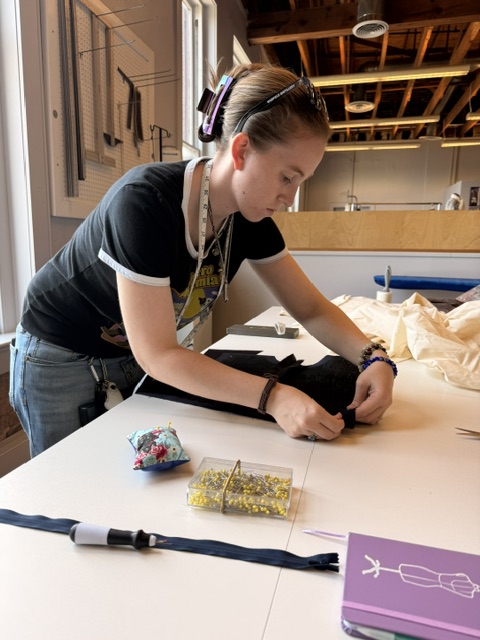
3. How do you define success for a fashion academy based in Little Rock, and what advantages do you believe students can gain by learning here?
Success is seeing our graduates build viable, independent businesses or secure meaningful positions in the industry—with the skills and connections to thrive. The advantage of Little Rock is focus. We’re not competing for attention with thousands of other fashion students in New York. Here, you have direct access to mentors, a tight community, and the time to truly master your craft. We can offer flexible schedules, quality instructors and payment plans that make education accessible . What makes our school different from other programs, the students are able to see a global designer work in real time – the challenges, the successes of running an international fashion business. I am in the office so I am accessible to the students who may have questions or concerns about their projects.
4. When a student walks through your doors on day one, what transformation do you hope to see by the time they leave?
Day one, many students have passion but lack direction. They have ideas but not the technical skill or business strategy to execute them. By the time they leave our two-year, 15-course program, I want to see precision in their hands and confidence in their minds. They should be able to take a concept from sketch to a finished garment—mastering flat pattern making, body draping, and tailoring. More than that, I want them to see fashion as a serious, viable career path, not just a dream. They should leave with a portfolio, a business plan, and a network.
During the process, I meet with the students to discuss their dreams and to make sure we keep them on track or pivot as they learn more about the program. After graduation, students are able to return to discuss their growth along their journey and how I can get them to the next steps in the process.
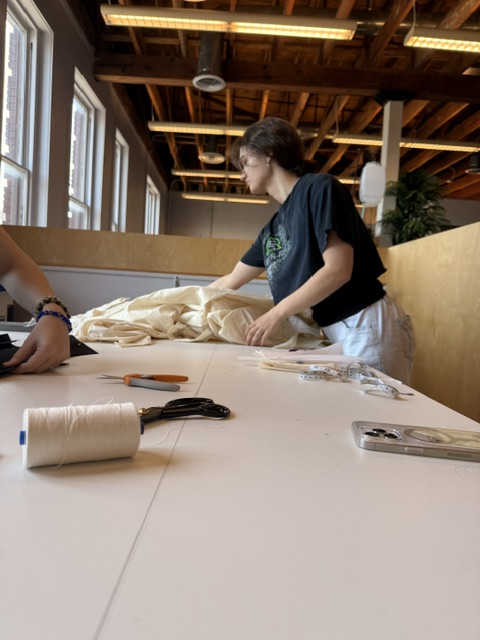
5. As an active designer and educator, how do you balance teaching established industry standards while encouraging students to develop their own creative point of view?
My past experience as a creative director in Paris and working for global brands taught me the standards of quality, fit, and construction that the industry demands. Those are non-negotiable. But I also tell my students: learn the technique, then ask why. Why is a shoulder pad placed this way? Why is a sleeve set in that manner? Once you understand the “why,” you can begin to question it and innovate. My own brand, Ashton Hall Collection, is built on that principle—respecting the craft while injecting my own perspective. We teach technique, but we encourage individuality.
6. Five years from now, what would make you feel that Blume & Hall has truly honored Jamileh Kamran’s legacy while still becoming something uniquely your own?
Mrs. Kamran’s legacy is the seed we’re nurturing . But we know fashion must evolve. Five years from now, I’d know we’ve succeeded if our school is known as a launchpad for a new generation of designers from the South—designers who are global in their perspective but rooted in the practical, sustainable, and community-focused values we teach. And the Jamileh Kamran Scholarship Fund we established ensures that her name and her belief in accessibility live on.
7. Are you preparing students for a fashion industry that exists today, or the one you believe will exist ten years from now?
Both. That’s the challenge and the thrill. Today’s industry requires social media marketing, direct-to-consumer savvy, and an understanding of creator culture. We’re adding classes in those exact areas. But the industry ten years from now will be defined by AI, by sustainable manufacturing, and by an international marketplace. We’re preparing students for that by giving them a foundation that can’t be automated: technical skill, creative problem-solving, and an understanding of the entire lifecycle of a garment, from design to production to sale. Fashion will change, but the need for craftsmanship and vision will not.
A Legacy of Fashion Education
Blume & Hall Fashion Academy represents both a new vision for fashion education and a respect for the academy’s history. While the school has been reimagined under the leadership of Ashton Hall and Lara Blume McGee, it continues to recognize the contributions of Jamileh Kamran (1953–2025), whose commitment to developing emerging designers helped shape Arkansas’s fashion community.
The following archival photograph, captured during a 2015 fashion event at The Capital Hotel in Little Rock organized by Lara Blume McGee, reflects a moment in that shared history.



You must be logged in to post a comment.