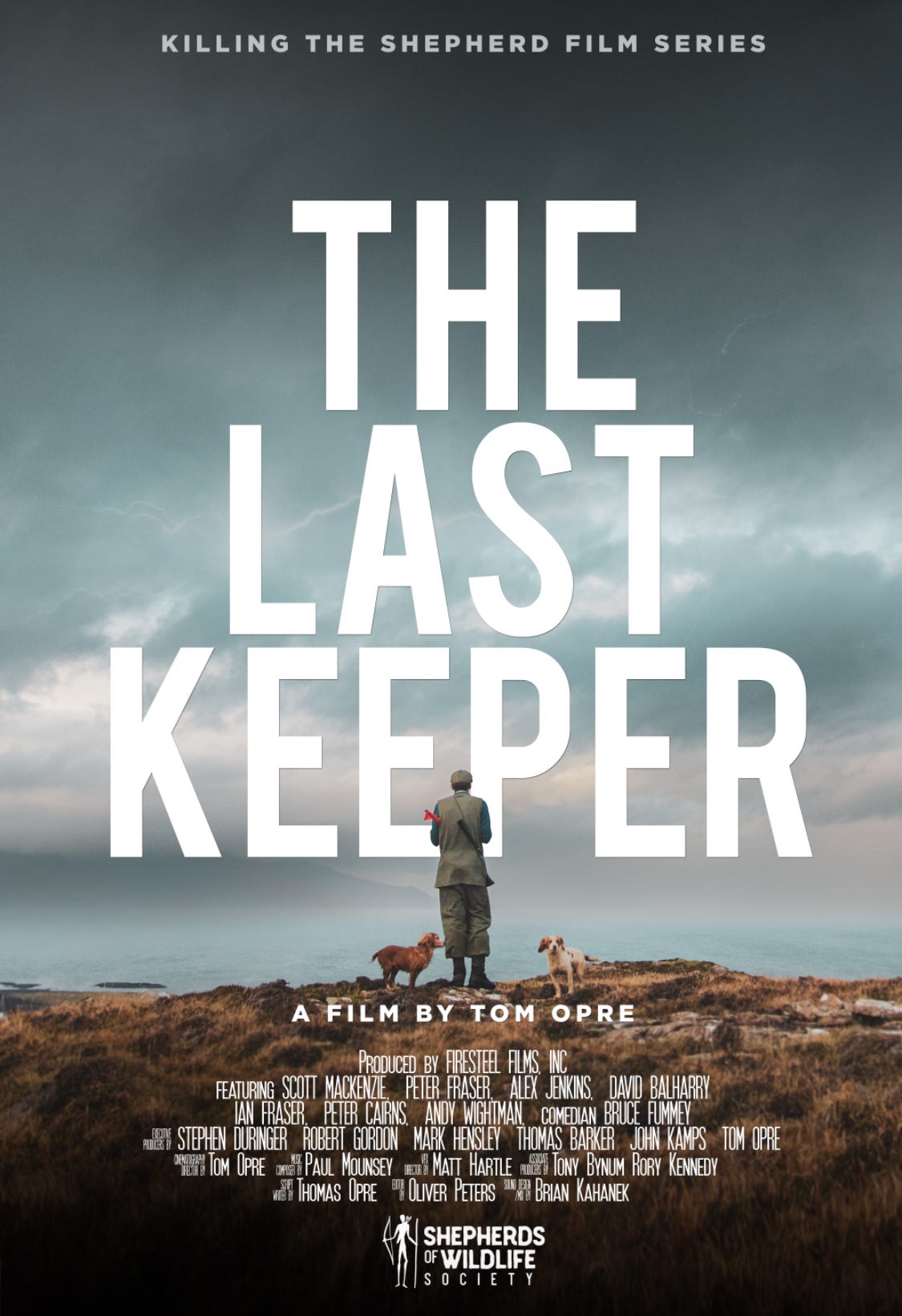
“The Last Keeper”
Rating: 9/10
Director and Writer: Tom Opre
Style: Documentary
Time: 1 hour and 30 minutes
Trailer: https://www.youtube.com/watch?v=kI8wPU-5kZo
Review by Mike Szymanski
Very few places on the planet are more beautiful than the Scottish countryside, with all the lush greenery, the large stags, the beautiful birds. It may be surprising that it could all come to an end because of warring factions that all want the same thing.
This very thorough documentary will have your head scratching because as soon as you are convinced of one side, you are sure to be switched to the other side.
A very simple example is the issue about the forests and deer. Some say that deer are forest animals, some say they are not. Some conservationists are trying to plant new trees to replenish forests. Makes sense. Well, the tall trees get knocked over in strong winds so it doesn’t make sense to put them back up. Makes sense. And, it’s been 2,000 years since some areas had no forests, but the deer thrive anyway. OK, that makes sense, too.
So, do you plant more trees to be like it used to be a long time ago, or not?
The Scottish countryside is at odds with itself. There are those who want to continue “re-wilding” by letting the countryside and its animals remain wild without interference. Then, there are those who want to cull the deer population because they are eating too much of the brush, and that will end up turning the place brown and dry.
But, if you slaughter the deer, do you leave the carcasses out to rot for other animals to eat, or does it lead to disease and vermin. If there isn’t enough deer to eat the underbrush then it gets too plentiful and then there’s a danger of fires.
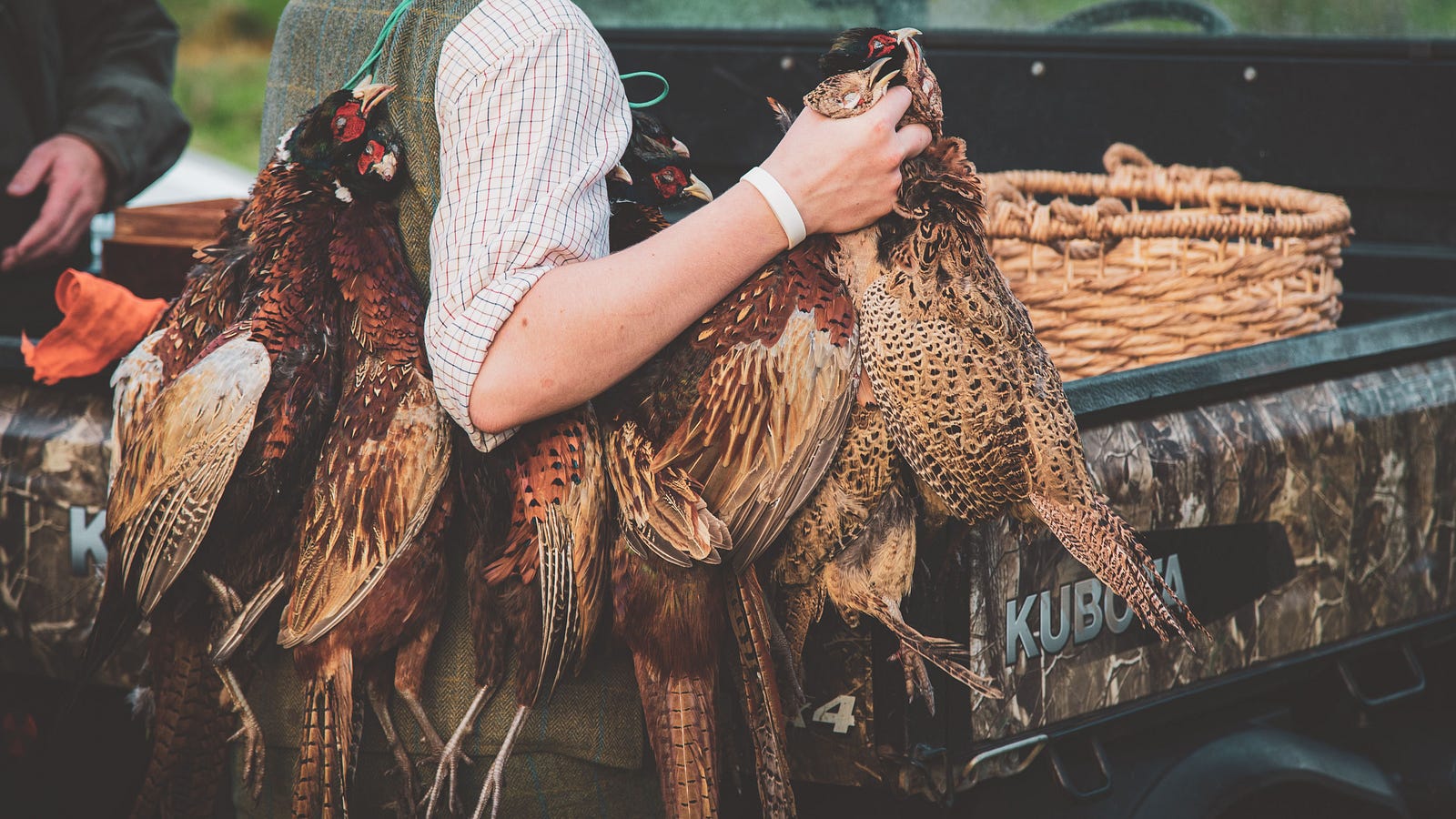
Some of the large estates are handled by a “Keeper” who controls the grounds, as well as the deer population around it, or the grouse, or the pheasants (which are the most prominent game in the area). Then, wealthy tourists come from around the globe to stay at the estate and go hunting.
Some of the locals complain that a lot of money is spent preserving the land and the estates for only a few selected elite, and that’s not fair. Other locals say that their businesses would have to fold if these tourists don’t come for these lavish hunting trips and spend money.
Others say it’s not hunting, it’s just “killing deer” because there is no sport to it at all, and it’s very much like shooting fish in a barrel.
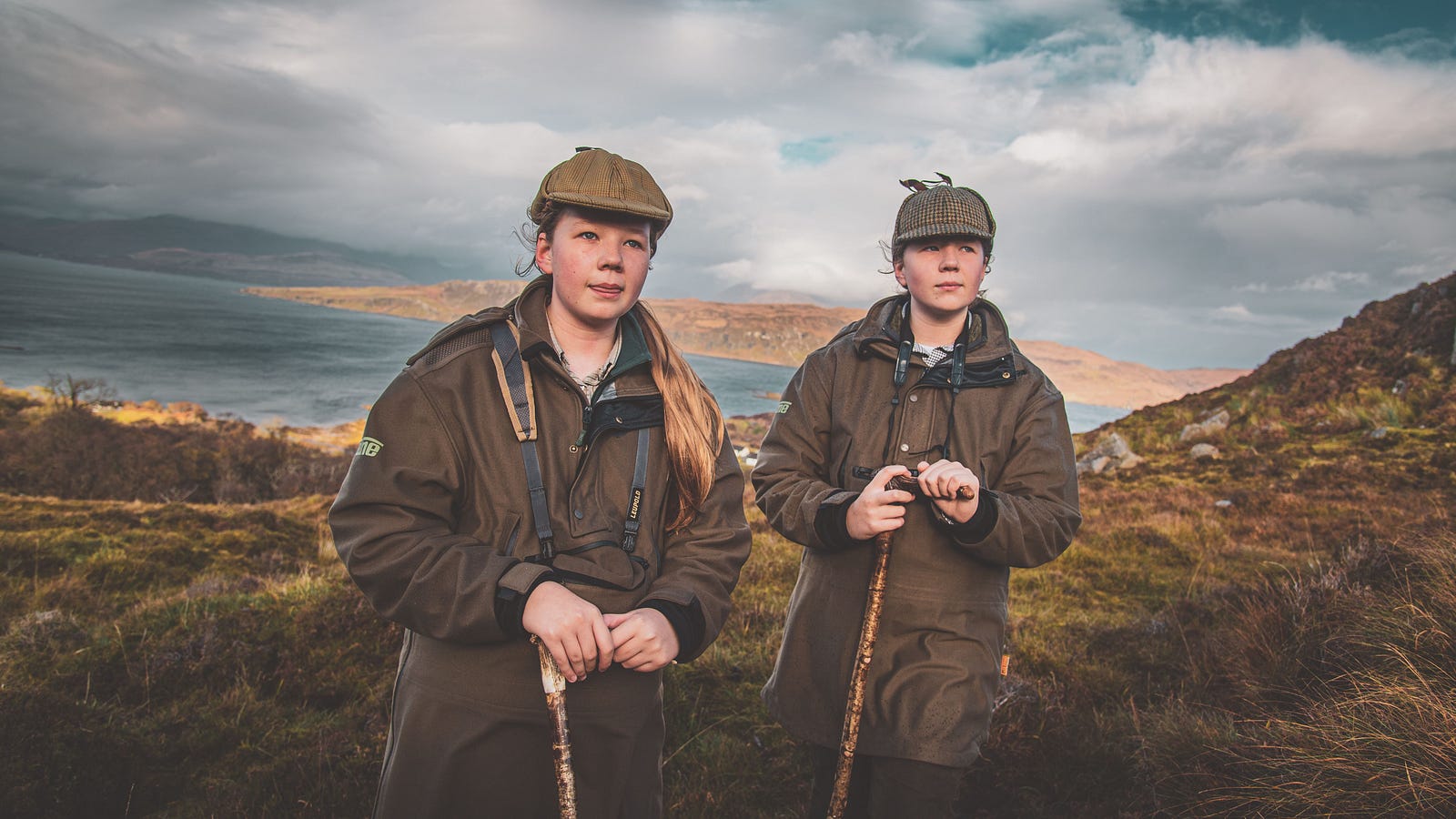
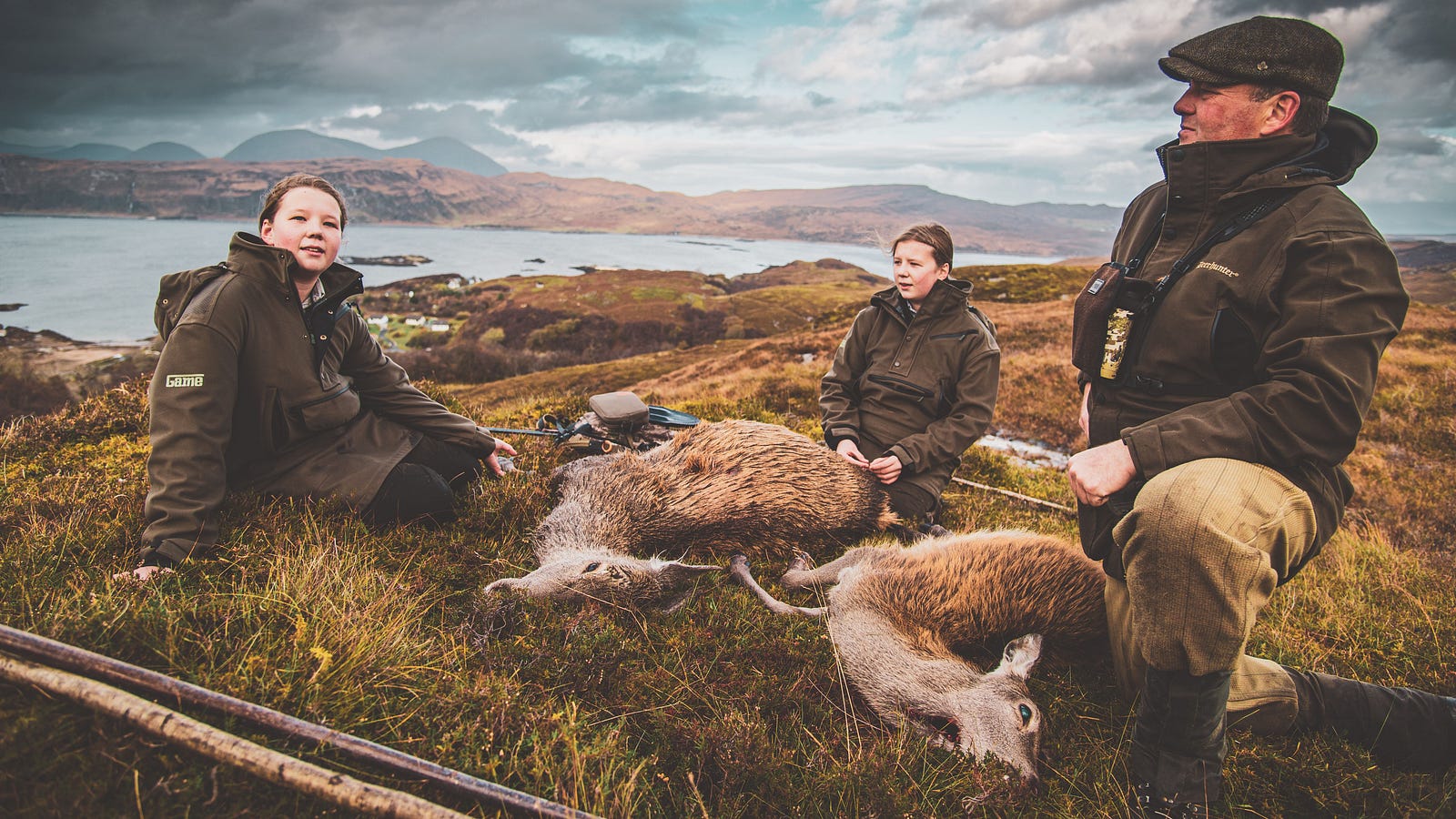
A cute pair of twin girls are daughters of one of the countryside’s Keepers named Scott MacKenzie. They talk about how their friends in school ask them why their father “shoots so many deer” and tell them “how cruel it is.” They protest the teasing and they explain that he only does it during stag season, and that it actually helps the area sustain an ecological balance.
They show how the Keepers can be demonized by some of the locals.
Some locals are concerned about cruelty to the deer, who can also starve for lack of food. Or the deer get rounded up into giant herds and then mowed down without much sport or challenge.
The film starts off on an island among the ruins of a Scottish castle. Scottish comedian Bruce Fummey, who does podcasts of history, makes a special appearance to explain the complex and unusual history of the area. He is over-the-top and funny, but he puts everything in context.
Fummey explains how Scotland’s history is romanticized for centuries of bloody feuds, warfare and forced displacement. Now there is a war over control of the land.
The documentary also explains why so much is decided against and about the countryside by people who live in the city. That seems very unfair as well.
Scotland is in the midst of the battle for land use. It is involved in class warfare.
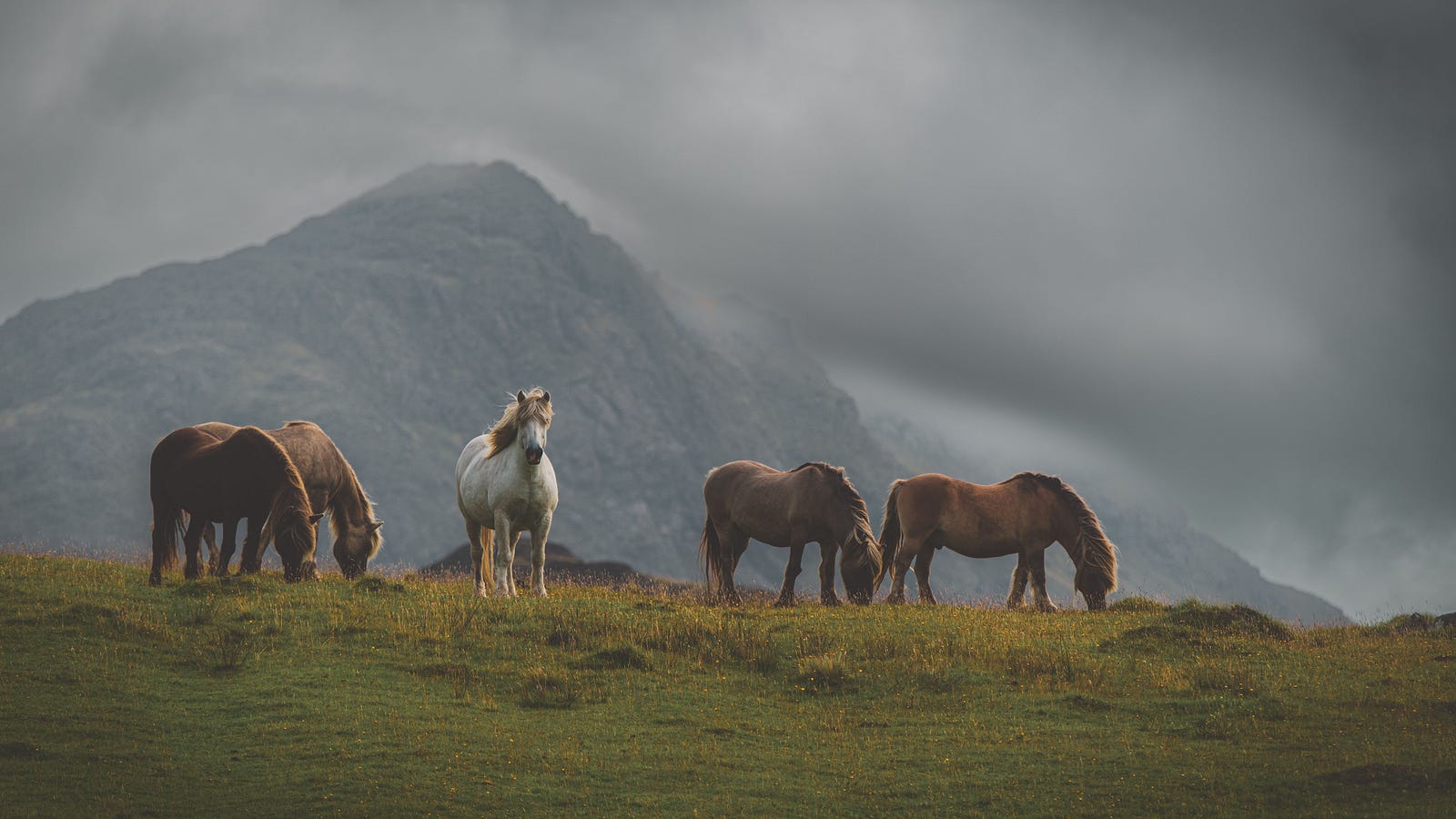
The sporting estates are isolated and impressive — almost as much as the hills where the deer, grouse and pheasants play. Seeing the beautiful fields of red deer is stunning. But, the deer are accused of deforesting, and certain species that used to live in Scotland are gone forever.
It’s fascinating that one local warns that even the use of the word “re-wilding” causes confusion and division. Everyone wants to be saving the land, and preserving the wildlife population, but no one is in agreement of how to do it.
A beer company wants to be the first in the world to be carbon neutral. A seamstress laments that without hunting season, she could not survive. Restauranteurs talk about their special recipes of grouse and lobster.
The cameras take us to the Isle of Skye, the Isle of Muck and other pristine places. There’s group called the John Muir Trust advocating for strict conservationist methods, but some people don’t trust them.
It’s not a documentary for the squeamish if you don’t like to see dead animals. There are plenty of shots of deers getting skinned, and de-feathering of grouse
The music in the documentary by Paul Mounsey is notable. The film score mixes traditional themes with strains of tension and softness when appropriate. It fits perfectly in with this unpredictable series of quirky characters you are about to see in this documentary.
We follow one Keeper until he no longer has his job. He and his family decide to move away, even though this is the only job he has ever loved, and his wife says she can’t think of him doing anything else. One expert talks about how there is an average of one suicide a week among the Keepers, and they are intervening to halt that.
The writer, director and sometimes narrator, Tom Opre, has had a long career in conservation and social justice filmmaking. His last film, “Killing the Shepherd,” takes a look at the poaching problem in Zambia and confronting the villagers.
This film has been shown at film festivals in Houston, Toronto, Dubai, and winning awards at Nature Without Borders, Documentaries Without Borders, Paris World Cinema Awards and more.
With all the different sides being shown in the documentary, one person explains very simply: “Was this land wild in the first place?”
As it says in the documentary, “it’s cultural genocide in slow motion, waiting for an answer.”
The movie has a limited theatrical and digital release in June 2024 in the United States and United Kingdom, and then will be streaming.
###