
“Escape from Extinction Rewilding”
Rating: 9/10
Director: Matthew R. Brady
Writers: Alex Vincent Blumberg and Peter Meadows
Style: Documentary
Time: 1 hour, 30 minutes
Trailer: https://www.youtube.com/watch?v=hSF5F6Ff-so

Review by Mike Szymanski
The mark of a good documentary is one that will make you take notice, react emotionally, or angrily, and go out and do something about it. Usually right away. Usually you are researching on your phone while the documentary is still playing. Often, you are donating to a new cause you just found out about before the movie is done.
This is such a documentary.
Often films about global warming, or the extinction of species, or the polluted environment are very depressing, hair-on-fire types of lessons. “We should have done things a long time ago,” and “it’s way too late,” are often the messages we hear in those docs.
This is the most hopeful of the many documentaries I’ve seen about these subjects, and it’s partly because the way the filmmaker and writers treat the subject matter and present the information.
There is hope in saving the world, according to the experts in this thorough doc that takes you to every corner of the world. There is hope in changing things, and it is not too late, according to them all.
And, not only are solutions given that the scientists are working on, they have some provable experiments that have worked, and they offer ways for you to get involved right away to help save your own small part of the world.
The statistics are always overwhelmingly depressing. One quarter of all species are up for extinction in the very near future, and that’s 40,000 different species. Misinformation dominates the world about climate change and anti-science dominates some of the politics of today.
Then, the soothing voice of multiple-Academy-Award winner Meryl Streep comes on to put it all in perspective. She says, “If the Earth is our home, how many windows can we smash?”
Streep’s gentle and authoritative tone mixes well to pull together all of the world-class scientists who are speaking in the documentary. The talking-head experts are from every corner in the world, and they help every kind of species.
Streep’s breathy narration talks about the multigenerational battle that happened in Rwanda after civil unrest killed more than 800,000 people in 100 days. The displaced refugees were moved into wildlife preserves, and they ended up taking care of some of the animals. Of course, they had to stop some illegal sources of revenue, like the selling of rhinoceros horns, and the lion population died off, but eventually the natives learned to importance of eco-tourism in order to generate a new world and lifestyle.

The black rhino was brought back to the world after nearly dying off. A rhino from a zoo in the Czech Republic had to be bottle-fed and almost died, but got healthy and is now berthing babies.
In another part of the world, only 220 gorillas were left in the world. Even though you know they share 98 percent of DNA with humans, the babies were cruelly stolen and sold to the highest bidder.
Some of the experts, like Debborah Luke, are internationally recognized leaders. In her case, Debborah has more than 25 years of marine and environmental conservation leadership experience, so she has a delightful air of authority over how she explains how some of the species have been saved.
Streep narrates how these global wildlife experts race to save Earth’s most beloved animals from mass extinction and environmental collapse. It’s a new approached to conservation called “rewilding” that restores entire ecosystems all over the world.
Whether it’s a forest in Northern California or a kelp forest under the ocean, scientists share in this new way of patching up the world.
They saved the blue-throated macaws, and the gentle giant manatees and a species of nearly extinct bats. The cameras go to Nepal, Seattle, Ireland and Europe. Every corner of the world.
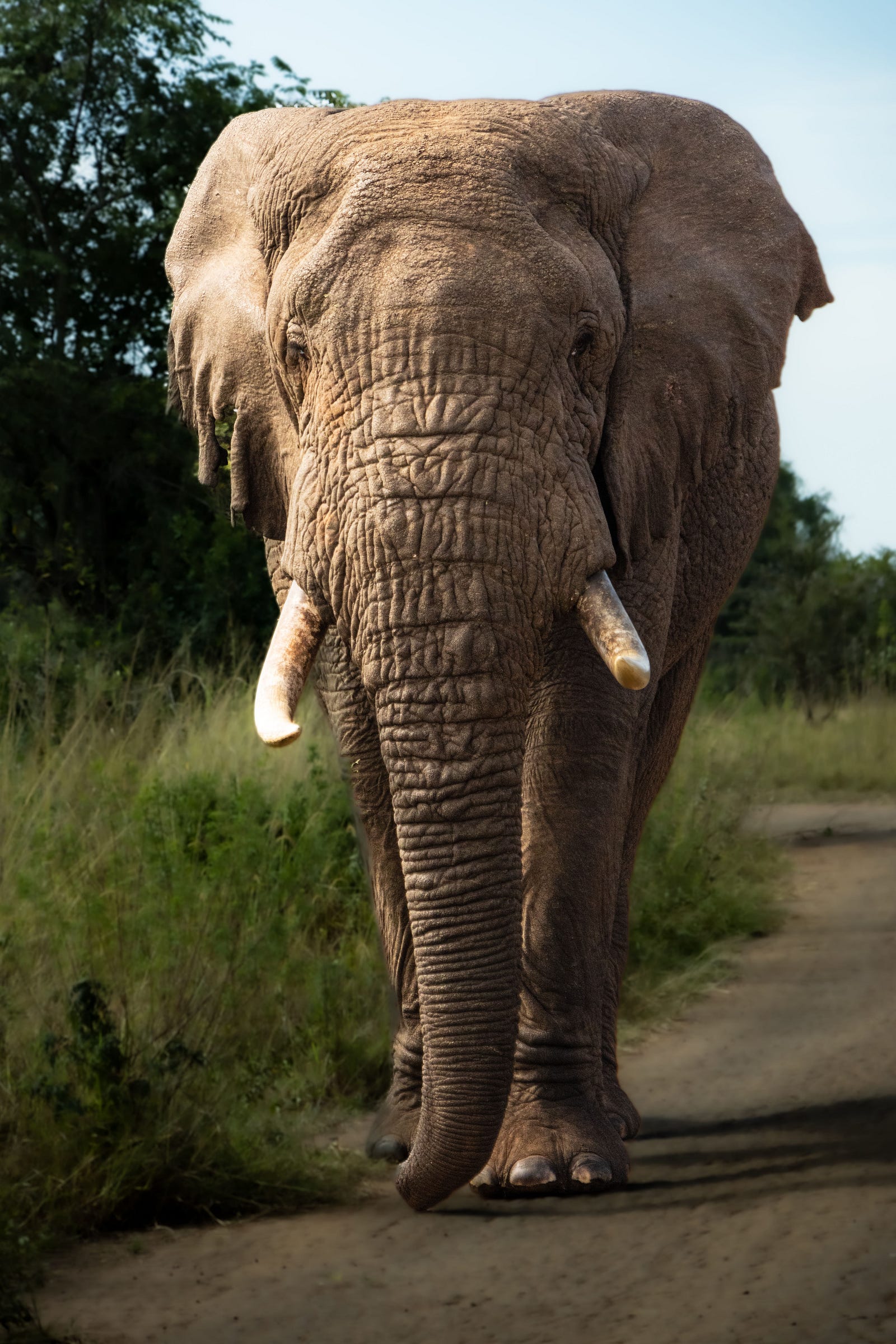
Animals are becoming extinct because no nature is left. Whether it’s the elephant or the manatee, the spaces for freedom and free-ranging are limited.
This bold new approach to science is not just preventing extinction of species, Streep narrates, but it’s about rebuilding the patterns and connections that support entire ecosystems. How does a species fit in? Sometimes even an endangered species doesn’t fit in and create problems.
How fascinating, for example, that hippos that are nearly extinct in one part of the world, but in Colombia, a handful of hippos escaped from a private zoo at the home of Pablo Escobar, the drug lord. In 1993, after his death, the hippos escaped into the wild and have caused problems for the local eco system because they now number more than 1,000.
Too little of the hippos exist in one area, but too many in one area is no good either.
Also, you may not know it, but hippos are the deadliest land mammal in the world, responsible for 500 deaths each year. (I also learned that when I went traveling to Zambia and Zimbabwe in the 1990s.)
I remember my guide talking about our families never seeing the wildlife I saw during those safaris in Botswana and Rhodesia.
“Your nephews when they grow up, will never see these animals out in the open like this,” one guide said. Thankfully, that’s not completely true.
This rewilding is a poignant reminder of our interconnectedness with the natural world and underscores the urgent need for conservation efforts, according to the director Matthew R. Brady.
He adds, “By showcasing these efforts on screen, the film can inspire empathy, action, and advocacy among viewers of all ages and backgrounds. It amplifies the voices of scientists, conservationists, and indigenous communities who are at the forefront of protecting biodiversity and restoring ecosystems. Moreover, such a film can galvanize global awareness about the threats facing wildlife and habitats, fostering a collective responsibility to preserve our planet for future generations.”
“Ultimately, directing this movie not only highlights the beauty and fragility of our natural world but also underscores our shared responsibility to safeguard it for the benefit of all living beings,” the director notes.

Some inter-species help is going on too. Big breeds of docs such as the Great Pyrenees, Springer Spaniels and Black Labradors hunt predators like foxes when around the endangered Bandicoot, which are fuzzy little creatures that are prey to foxes.
The beautiful deep blue Lear’s Macaw was saved from extinction, and the wolf is making a comeback in Germany after being nearly hunted to extinction.
Yosemite is a pristine ecosystem that was created by the cruel displacement of native American people, but now more indigenous people are taking a more active role in preserving their lands.
Meanwhile, tragedy occurs. Too many logs come out of national parks on a daily basis 24 hours a day in Brazil, decimating whole forests.
And, more than 2,000 environmental activists in past decade were killed when they were challenging mining and factory lobbies.
The film suggests everyone pick one species to help save, and that will lead a path to peace.
There are a lot of success stories out there, natural habitats are coming back to life, and there is hope.
It’s no wonder that this won the Best Documentary for the Atlantis Awards in 2024 and is sure to win more accolades.
And, as the “wimoweh” chorus of “The Lion Sleeps Tonight” plays at the end during closing credits, the filmmakers offer a lot of suggestions — some big, some small — on how to begin helping out.
This documentary will play in theaters on September 27 and it is worth seeing these spectacular settings and precious animals on the big screen.
###


 Dreamweaverarts
You must be logged in to post a comment.