
The Devil’s Tongue
Rating: 8/10
Written & Directed: Julian Gowdy
Style: Thriller
Time: 78 minutes
Review by Mike Szymanski
At what price will it take to get your movie made?
Anyone who has ever made, or met someone involved in making, an independent movie will know and can relate to the problems of this director that he is facing in this movie.
While making his movie, the director has actors who feel overworked and simply leave the set so that they can go to a job where they get paid. Even the editor hasn’t watched their dailies from the latest shoot because he had to complete a paying gig.
It’s a familiar, frustrating dilemma that makes me wonder sometimes how anyone actually gets a movie made these days.
This is a cautionary tale — a dark comedy — of what it’s like to put art (in this case filmmaking) over everything else in life and the disturbing consequences that can happen because of that.
What results is reminiscent of a brilliant Belgian pseudo-documentary “Man Bites Dog” where a film crew follows a serial killer, and the absurdities of self-sacrifice and extremism as explored in “The Banshees on Inisherin.”
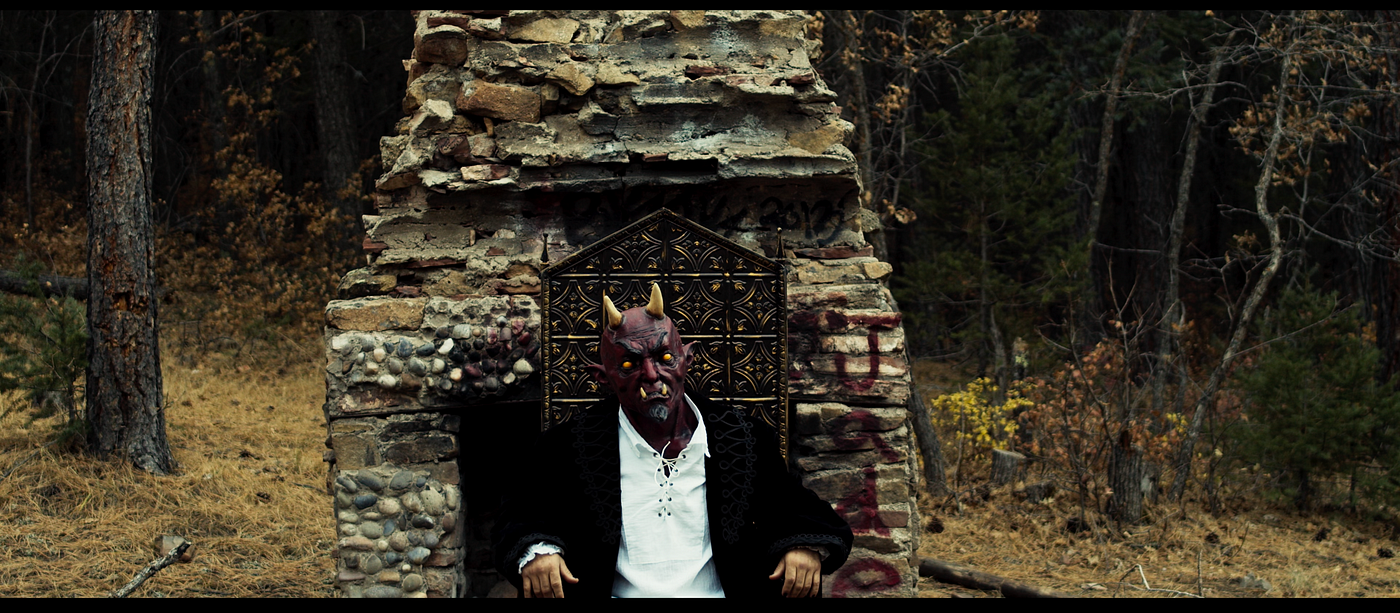
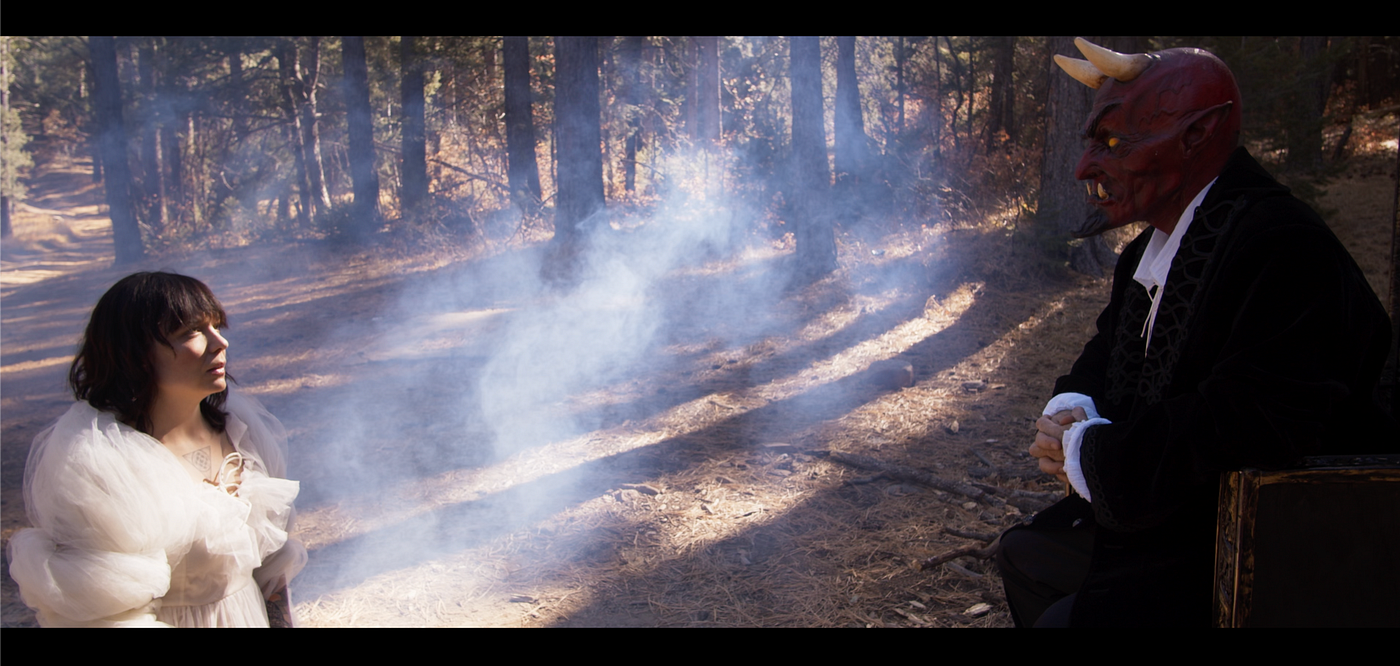
The character we follow is an independent film director and writer Julian, who is portrayed by the real-life writer and director of this movie, Julian Gowdy. He is making a goofy horror movie called “The Devil’s Tongue” and his lead actor Steve (played by Graham Rickerman) is wearing a scary devil’s mask the whole time. The vain actor wants to be shown without the mask so that his true acting talents can be on display.
Actress Reagan (played by Summer Binkley) flubs her lines and the director begs for one more take but the unpaid actors have had enough and are going to their actual jobs that pay real money.
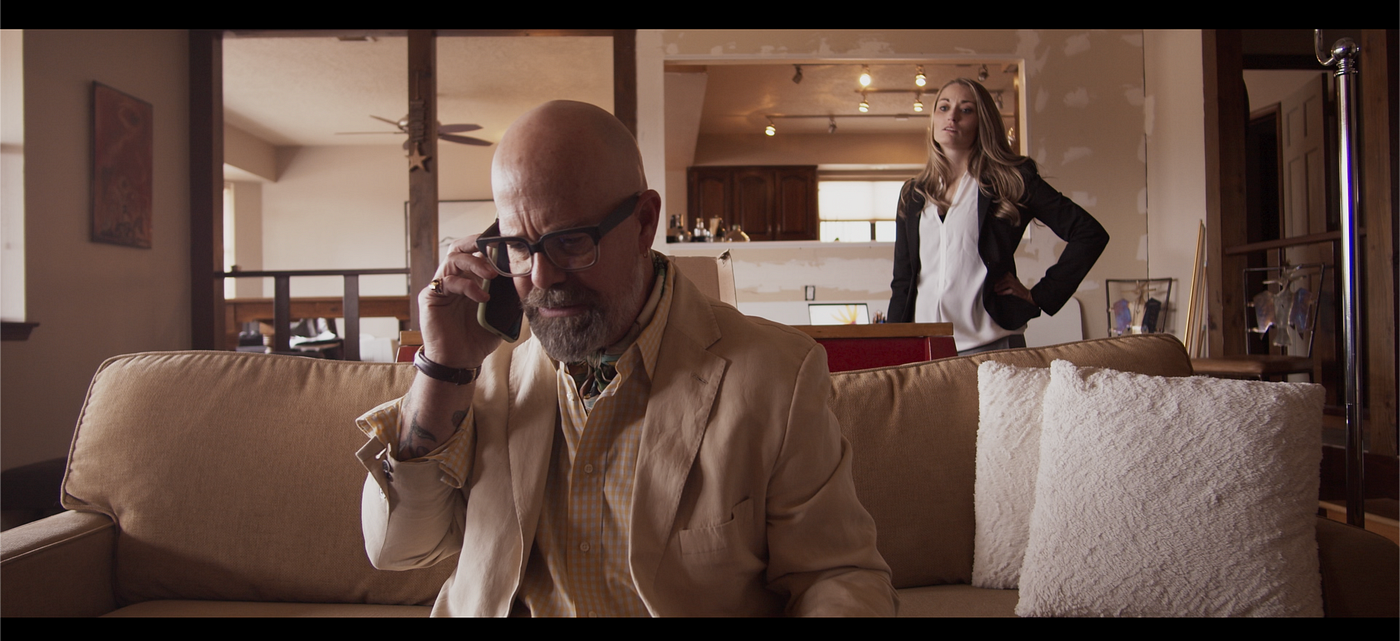
They are uncertain when they can volunteer their time again which puts Julian in despair. He knows there will be no coherent continuity in the piecemeal scenes he is shooting because the lighting will be different in the woods and other problems.
He begins to be convinced he is working on an experimental film, sort of like a verite or mumblecore filmmaking where conventions are not followed. His loyal movie collaborator played by David Sbarge supports the new idea as does his girlfriend played by Sarah Ward.
Julian laments the chorus that artists spew when they claim if he just could quit the job he hates and devotes himself fully to his movie, then he could create his masterpiece.
An old friend fresh out of rehab (Morris Swed) is still doing cocaine but tells Julian about his rehab roommate (Philip Bushman) who is the son of some big-time Hollywood producer (played by David Snow).
That’s when Julian feels backed into a corner and concocts a series of self-sacrificing things in order to reach his passions. He essentially kidnaps the producer’s son and waterboards him on film and makes him fall of the wagon by forcing the captive to snort coke.
Trying to get the stubborn Hollywood director to simply read his script, Julian pulls out his own fingernails to send them to the producer but he remains unmoved.
A caring 12-step sponsor (Jon Nelson) isn’t able to pull Julian from the cliff. Julian is convinced that his plan will make him famous and a champion of independent filmmakers everywhere.

The idea came to Gowdy when he himself was in rehab and kept hearing how people would say that they had put their drugs or alcohol over everything else in their life.
The director says, “That’s what addiction is: putting something, anything over everything else. At first that seemed ridiculous, but the more I thought about it, the more I realized it was true, especially for me.”
He adds, “I am an addict. I say that without shame but with lots of fear. I now have more than four years clean and sober, and I realize I can take something, anything to some very terrible places.”
And so, he is exploring what would happen if he puts art over everything else in his life. He knows it certainly wouldn’t be pretty.
This is Gowdy’s first feature and it’s wildly impressive. He planned for an inexpensive film and was awarded a COVID-related grant for $10,000. It was just enough to cover the film, just barely.
He created a wonderful community around him during the making of the film, and Gowdy quickly realized he was making something special.
“That scared me,” Gowdy says. “The support I received from the cast and crew had been so wonderful. I didn’t want to let them down, because they certainly never let me down. In the end, I’ve never felt prouder. Never felt so fulfilled, so grateful, as I did while making ‘The Devil’s Tongue.’ “
Some stellar performances truly make the movie, especially Philip Bushman as the kidnapped son, who brings levity even into a scene about torture.
Julian’s filmmaking colleagues abandon him when things get too real and the obsessive director seems to lose it.
Art over everything is not truly the best way to go, but in this case it will make you remember Julian Gowdy’s name.
###

 Dreamweaverarts